8.29.2011

Us Against Us (and occasionally Them)

A large part of the art community is concerned with fighting the good fight to promote and advocate for continued support, funding and recognition of the importance of the arts in society. This is not a unified front however, and it seems to be just as common for people to take on a problem within the community than it is to fight from the inside facing outside. Some of us get pissed off when our work doesn't get accepted into a program, that a proposal doesn't get money, that some artists seem to show more than others, and that those artists' work sucks anyway (to make matters worse). We are not critical of our own work, but of the reception of our work and the structures that control it. One solution to all this is utter anarchy and art-blood in the streets...which is sort of appealing, but will end up in a real shit show, without distinction between good and bad art, with no decisions being made as to what is worthy of attention or not. The actions of critique and rejection are almost always to do with fulfilling an institutional mandate. These decisions do not have to do with the quality of the work (although it may) but more to do with the organization's goals of producing a specific project or idea, or fulfilling funding expectations.

Many artists take the submission-rejection/acceptance process personally and in turn reject these processes, questioning the circumstances that led to this system of communication between artists and facilitators. A recent show at gallerywest curated by Clayton Windatt, Social Rejection, explores this relationship by creating a communal space for artists to share their rejection letters with one another and stand up against “the stressful condition imposed on the artistic majority by the elite few” [1]. To curate a show of rejection letters is too self-referential and counter intuitive to be honest, although the art community loves irony, often to the point that it doesn't know if it's being ironic any more. There was a couple open calls for submissions (akimbo etc.) for rejection letters many weeks ago – and this exhibition must be the result of those calls. There is nothing more inclusive than an open call, although it never presumes that all submissions will be included, only that the curator has not yet made selections from personal studio visits behind closed doors. I can assume that anyone could have brought their rejection letters to Windatt's attention and that he would include every one of them in the show. If he didn't, he would have been supporting the very system this exhibition is vehemently taking a stand against.

The pressing question for me is “who are these cultural elite?” I'm on a board and have served on committees and I know many people who do as well. Are we the elite? If we are, then we are the same as the artists submitting, since I know that many of my friends serving on the dozens of selection committees in this city are artists themselves who submit proposals to galleries, festivals, series etc. This isn't a hostile situation unless we make it one. The alternatives to this submit-reject/accept structure, such as lottery programming or huge group shows hung in salon style, are never too appealing either. A large component of the art world's job is to create a taste-making structure, in order to present what is fit to present, not just stuff from any and every person who calls themselves artists. Your work's not important just because you made it; the festivals aren't important just because they exist either, but they have funding and partner support and venues and committees, so they are a bit more important, actually. If you want your work shown you have to go through these avenues, or else find a new avenue.


Artist self-victimization is getting tired. The arts world has ALWAYS been 'fighting the good fight;' we are in a constant state of keeping our head-above-water, and sometimes I think it's because we thrive on this mentality. If the community had tons of sponsorship and centres and residencies, then we would also become mainstream and therefore be controlled by companies and structures that are even less objective and equitable than the various arms' length councils we currently rely on. The arts don't get a lot of money because not a lot of people care, and not a lot of people care because we're not doing things that interest them, and we're not doing things that interest most people because we're not interested in pandering to the mainstream. We're struggling because it's part of the intrinsic condition of the arts community – or maybe it's not. This self-victimization also goes hand-in-hand with self-criticism as it is also an important element of a healthy arts community. In posting rejection letters, we are shown, en masse, the section of the art-iceberg that floats below the surface and we start to question the systems that we - artists, curators, programmers - must mold ourselves into. However, when artists, curators and programmers are also on the other end of the decision making process, we are demonized by the same groups with which we identify.

Privileging the rejection letter as a object worthy of display can dry a few tears and pat a few backs, but the work that those letters are rejecting still lies dormant. Is it more important for the artists' whining to be legitimized by a gallery instead of their work? Wouldn't they still just prefer to show their work – especially within a forum that has rejected rejection, as Windatt's curatorial premise claims?

There was a follow up open forum, Exhibition and Its Discontents, at the end of the 2011 Images Festival that addressed the issue of rejection and inclusion where artists and arts administrators got together to discuss these very issues. It was initiated by MANO (Media Arts Network of Ontario), so it was specific to film and video festival submissions, although it also related to exhibition proposals in general. Overall, it didn't get too heated to be unproductive, but it's obviously a potential sore spot for many people. The outcome was a mixture of opinions with some people demanding more courtesy while others expressed their consideration of the rejection process as a source of motivation. There was a perceived lack of trust between the two parties (submitters vs. evaluators), in that the submitters love the festival they submitted to only until they were rejected, at which point they subsequently disqualified the judgement of the juries. There is a shift in respect that's based on personal issues not on issues around the quality of the works in question. The work could very well have personal content, it could be an artist's baby, but the point is that if it's not accepted in one forum, it should be submitted to another forum and another one – if the work is strong and should be shown, the proper context for its acceptance is crucial to how the work will be received. When good work is presented in a good context the artist benefits in an audience that is targeted, captive, engaged and informed. The context that allows work to be shown has just as much meaning to impose on the works it facilitates as the content of the works themselves – to discredit the infrastructure is to say that it holds no meaning, when really, through your choice of submitting to those programs, you are reinforcing their important role in providing a context for your work.

An expression of antagonism towards this system is insulting for everyone involved. Criticism of how panels are formed, how decisions are made and how galleries operate is an important form of self-regulation, but it always should be kept in mind that we're all fighting the same fight, or perhaps that there is no real fight going on and we shouldn't try and start one. A free-for-all against the un-named cultural elite aligns itself with the current neo-conservative anti-intellectualism that is quickly creeping up both municipally, provincially and nationally to become an increasingly immanent threat that is much more pertinent than not getting your video into the Images festival last year.

------------

[1] News Release for Social Rejection, http://www.1332queenwest.com/archiveWindatt.html

4.17.2011

It takes everyone to know no one

Lorna Brown, Jennifer Cherniack, Rodrigo Hernandz-Gomez, Chris Holman, Yvonne Lammerich, Dax Morrison, and Anne Ransden

Curated by Ana Barajas

April 8 – May 21, 2011

Jennifer Cherniack, The History of Art According to My Archives
ongoing series in a variety of media, 2009-present

An exhibition about exhibitions and the institutions which host them. That some of the works in It takes everyone to know no one suggest new models for arts institutions while structuring themselves within the very framework they wish to critique is beside the point. The other option, to host an exhibition on institutional critique outside the white cube venue, also doesn’t seem any more productive. At the very least the gallery model allows the artists and curator to organize talks for people to come and talk about the institution in an institutional manner. People want to discuss infrastructure because it allows that chance for resistance against the control that it actively and insidiously asserted upon us. The contemporary art gallery often flaunts itself as being a space for reflection, challenge and critique, but this is usually very different from what actually goes on, which is something that strongly suggests the maintenance of the status quo, again and over again.

The artists in this exhibition take a good-natured approach to institutional critique using humour and the power of suggestion (rather than commitment) as tools for critique. I personally adhere to the dramatic ideas of Allan Kaprow who believed that museums are cemeteries for art and culture; through museum placement, art is taken out of its natural context, spirit and connection to its creator and is then left to ossify and become inert [1]. The artists in It takes everyoneare not so aggressive (or dramatic), although they remain passionate about their goals. This act of pointing and suggesting instead of committing is a bit self-preserving (that institution you claim to critique just paid for you to show your work, have a meal, maybe a trip to Toronto and a few beers) but also productive. These people don’t have the answers, but they bring up and address the argument, and I certainly don’t know many other artists who actively take this up through their work and make it public. The works by Lorna Brown, Yvonne Lammerich, Dax Morrison (Migration Patterns, 2010 ongoing) and Jennifer Cherniack all address the model of the art institution through what can be currently observed. They are specific to the internal operations and systems, whether it is the language of the stereotypical institutional mandate, the migration history of directors and curators among Canadian arts institutions, or a listed archive of exhibition-types.

Jennifer Cherniack, The History of Art According to My Archives
ongoing series in a variety of media, 2009-present

This is canonical institutional critique that still has an active and productive voice – everything remains self referential. In Isabelle Graw’s essay Beyond Institutional Critique [2], she points out that the language and practice of institutional critique as art practice is inherently paradoxical, although I’m unsure if this is an historical fact or one that has only just now revealed itself 30 years on. The language is so ingrained that it has also become institutionalized, “a critique not simply addressed to institutions and critical of them, but also a critique of an institutional nature…” (141). The institution has prompted the incentive for artists to make art about the institution – hook, line and sinker.

Where I get uncomfortable is in the case of the externalization of the institution which lies in the work of Anne Ransden’s The Musée du quotidian/Museum of the Everyday (2009, ongoing) and Rodrigo Hernandez-Gomez (in collaboration with Morrison and Chris Holman), Cultural (de)Centre for a Precarious Century (2011, ongoing). There is something eternally bourgeoisie about artists calling attention to the ‘everyday’ as something that is now important to pay attention to - as if the rest of us, in our hustle-bustle lives, are somehow missing out on the importance and meaning of what’s directly in front of our faces. This is an outdated responsibility of the artist to be a privileged inspired twat (again, I’m being dramatic). Sure, there’s plenty of literature and theory on the concept of the ‘everyday’ including Kaprow’s ideas about the blurring of art and life. What makes this more uncomfortable is not the blurring but the authority of the institution being applied beyond itself and onto the ‘everyday’; a dangerous one-way street. This institutional application, although already occurring through Big Brother, cannot possibly be spun as something that we should embrace, especially in the art world that thrives in the periphery.

Jennifer Cherniack, The History of Art According to My Archives
ongoing series in a variety of media, 2009-present

In the Museum of the Everyday posters, the voice of the cultural institution is used as a tool through which the viewer can understand what’s being said, killing the power of individual opinion, inference and any possible honest awe over everyday experience. The institution is telling us what to pay attention to. I don’t care about a collection of people travelling to school or walking the dog or having a bath; I’m now dead inside. Cultural (de)centre employs the corporate ribbon-cutting ceremony as a tool to signify the inauguration of yet-to-be-claimed public spaces. In the exhibition space a monitor shows us stills and video of people cutting ribbons at rather non-descript sites, including domestic living rooms, restaurant kitchens, parks and back alleys in order to claim them as cultural spaces. If the project continues ad-infinitum, soon enough, all spaces will be institutionally claimed, and all of the everyday activities within will ossify and die according to Kaprow’s analogy.

These two projects suggest new boundaries of what is considered as institutionalized art and what isn’t, subsequently moving towards establishing institutional confusion. There is no outside in these projects, as the inside of the white cube regurgitates its insides into its surroundings. This means that an outside objective critique is so absorbed and indistinguishable from the inside that it fails to exist. Don’t do this. The outside is not the enemy – unless you think that making everything look the same may also eventually invert as to undermine the authority of the institution? Maybe? Graw says that “a constitutive outside is not only needed, but inevitable. Some things will always be left but, often deliberately: structurally speaking, every centre has its periphery.” (143) Despite institutional critique’s institutionalization, a superbly predetermined twist, a critique will always have room to exist. From this, I think that any projects which look to work the periphery into the centre are not only fighting a loosing battle, but are kidding themselves by thinking that they are in any way peripheral to begin with.

Don’t make the white cube into something more than it is – it doesn’t benefit any of us.

---------------------------------

[1] I also believe that the curated re-contextualization of works (works that are taken up time and time again for exhibitions) produce a instable, fluctuating history that can eventually cause the works to loose their provenance and meaning. How many curatorial contexts were really necessary for the work of Jeff Wall before the audience didn’t know what the fuck was going on anymore?

[2]Found in Institutional Critique and After: Volume 2 of the SoCCAS symposium, JRP/Ringier (Letzigraben, Zurich: 2006), Ed. John C Welchman

3.03.2011

Your Next Life: Producer or Consumer?

Your Next Life - The Whitehouse- 11 February 2011

Laura Curley, dAeve Fellows, Jonathan Mayhew, Erin Finley, Mark & Patricia, Randall Gagne, Stacey Sproule, Stephanie Fielding, Ulysses Castellones, Robert Dayton, Hanna Hur, Mark Byk, Ian MacTilstra, Jonny Wheeldon + Maleen Relk, Peter Mohideen, David F.M. Hanes, Zoe Noble Fox, Kaley Flowers, Beth Kotierk, Zoe Solomon, Nitasha McKnight, Felix Kalmerson, TARPGHOST, MLXNDRSC, Singithi Kandage, Marisa Hoicka, James Fowler, Fox Xoft

Performances by: Amy Jenine Ling Wong, Adriana Disman

I was recently reminded of the shared meaning-making process between performance artists and audience members at a recent exhibition and small performance showcase, Your Next Life at the Whitehouse. The space was crowded with drunken people and it was about midnight; rowdy, chatting, yelling, dancing, making out. To begin a quiet, introspective and delicate performance in this atmosphere is a challenge if only to contain the crowd. Enter Amy Jenine Ling Wong. Enter disruptive gentleman who doubled as a walking stereo, a couple belchers, some gigglers and an impromptu documenter and we have a perfect set-up for audience interaction as part and parcel of a performance. To say that the audience is not implicit in the real-time interpretive meaning-making of a performance work is an argument you can’t win. Although I am a great advocate and attendee of performance art events, I could not for the life of me mentally leave the social party atmosphere and pay attention to the performance. Early in the performance, once the crowd had settled to be quiet enough for the first couple rows (kneeling down in a semi-circle) to hear Amy speaking, there was a man standing in the side lines, with speakers blaring from his knapsack and chatting quite loudly to no one listening. A man on the other side of the room yelled, over the audience, over the performer, breaking the weak silence that was barely established: “Hey guy, shut the fuck up.” This was followed by some giggles and accolades that settled reasonably back to an almost quiet audience. This was also partnered with some occasional loud belching (result of the several tall cans circulating) and laughing with my friend over the belching and saying “hi” to another friend over someone with a small portable camera recording all that was happening (including the “hellos”). I was paying far more attention to what was going on around the performance than the performance. Where was the performance?

Again, I was recently reminded, a couple days after this night, of Fluxus and John Cage’s consideration of the responsibilities of audience members and the responsibilities of the artist in interpretive authority and production as being very blurred. I came across a quote from Cage where he expressed his endeavour to ensure that “people realize that they themselves [audience] are doing it, and not that something is being done to them.” In the case of this event at the Whitehouse – the audience had taken charge – they were doing and being done to (done to each other?). At the time, people were frustrated, disturbed, drunk, judgemental, or they were ignoring all that was going on around them and paying full attention to Amy’s performance. Whatever was going on was a part of the performance or it was disruptive and competing with the performance and Amy should have been programmed for a different time slot and perhaps a different venue.

I recently talked with Adriana Disman, who also performed in Your Next Life in a separate side space from Amy’s performance in the main space. She expressed a fascination with the Whitehouse audience, considering their behaviour to be very respectful in the way that they were able to calm down enough for Amy’s quiet performance (again, “quiet” only by comparison, considering the room was filled with yelling chatting drunken youths). She also reflected briefly on her own ongoing performance that evening that placed her in a vulnerable position where people volunteered to lay in bed with her for intervals of time. She said that she had anticipated that someone would get “handsy” (and had prepared for this outcome) but thankfully that wasn’t a problem. She was impressed by the audience reaction to both performances. I would agree, that we (the audience members) gave a pretty damn great performance.

What does it mean to be more interested in what’s going on in the audience than what’s going on in the performance? Is this an indication of the performance being somehow inadequate or that I am simply equally impressed with what audience members brought to the table? Positioning all these issues in a discussion about context seems to resolve some questions.

The only way that people can be so relaxed with these situations is because of the nature of performance art, as non-object-based and de-commodified, allows people feel like it’s more of a work in progress (up for resolution and addition). I believe the relaxed situation, in that the party atmosphere of the Whitehouse fractures the austerity of the white cube, which facilitates the environment where people do feel like their actions have more of a stake in the overall experience.

If the performance needed a quiet audience, the artist and programmer should have ensured that that was provided, or else deal with the consequences. Perhaps the performance was intended as an interactive experience, implicit to the meaning of the work– but how far can this be allowed without loosing control?

This goes back to Cage’s quote that boils down to consumption vs. production. In larger museums/galleries, visitors are consuming a product: the institutional identity, the exhibition design, the gift shop, the infrastructure (something is certainnly being done to them). Somewhere like the Whitehouse – you’re not buying into that space through attendance or admission fees to anywhere near the same degree – you go to experience a different kind of art – potentially work that hasn’t ever been digested or “resolved.” The Whitehouse has not produced some large expensive marketing plan that is directed towards specific audiences. Its goal is not to bring its attendance numbers up, or if it is, their goals are directly relating to benefiting artists directly (either studio members of exhibiters) through those bigger audiences. In that space, audience members can be producers and not consumers – and this happens in real life.

1.23.2011

Artist Placement Group Manifesto

  1. The context is half the work.
  2. The function of medium in art is determined not so much by that factual object, as by the process and the levels of attention to which the work aims.
  3. That the proper contribution of art to society is art.
  4. That the status of artists within organizations must necessarily be in line with other professional persons, engaged within the organization.
  5. That the status of the artist within organizations is independent, bound by the invitation, rather than by any instruction from authority within the organization, and to the long-term objectives of the whole of society.
  6. That, for optimum results, the position of the artist within an organization (in the initial stages at least) should facilitate a form of cross-referencing between departments.
Installation of the Industrial Board Room, Art & Economics, Artist Placement Group, Hayward Gallery, 1971-72

The Artist Placement Group was founded in 1966 by Barbara Steveni and John Latham in London (UK). It operated as a job placement company - inserting artists into corporate (for-profit) organizations where they could apply their creative skills. Producing photographs, films and videos, the artists worked independently of the companies they were placed in, acting as a voice that could assert itself from the inside. The resulting projects and evidence of the placements were exhibited in the APG's first major solo show at the Hayward Gallery in 1971, titled Art & Economics. If you think this is trying to do too many things, I agree. The model is socially engaged, but still separates the artists from the hand-on work of the companies; it operates a bit like a residency program, but it's confusing if the benefits are more for the company or for the artists in these partnerships; the resulting work could be more of a political comment that's implicit in the gesture or through its content, but that's left to be determinded; no one's getting paid, so artists are still poor and companies are still rich. How does all this come together as something that's productive? The new book from YYZBooks, Byproduct (2010), provides a good play-by-play that includes an essay tracing the history of the group along with an interview with Steveni and Latham and a re-print of their manifesto. Some narrative history can also be found on Tate Modern's website to try and sort things out.

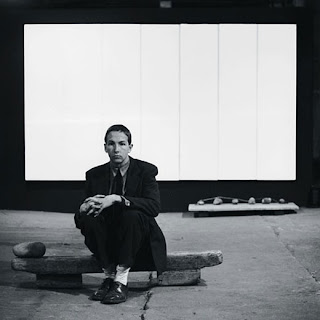
The 'structural,' 'operational' and 'theoretical' components of the APG were conducted by different people (Steveni making the contacts to set up placements; the placed artists doing the leg-n-art work on site; and Latham creating the swirling theory around the project) which was all convoluted at best. The most interesting part, and most enduring since I don't have a real sense of what was produced on-site, is Latham's terminology for what took place. Corporate idealization of 'event structures' and the 'least-event' formed the framework. The 'event structure' was the method of measuring the activities which, in an ideal world, all resulted in a 'least-event.' The "least-event" is described by Latham "as a kind of zero moment from which things flowed forward into the present and beyond" (Byproduct, 40) and examples of this in the art world would be John Cage's 4'33" (1952) and Robert Rauschenberg's White Paintings (1950s). A "least event" is a blank slate, projecting into the future some kind of simplicity or totality, or it creates a context for moving forward - blending all fields and all possibilities.

Robert Rauschenberg looking very business-like in his dapper suit sitting in front of his "White Paintings," 1951

This leads to the first item on the APG's manifesto (above), that "context is half the work." Ain't it though. Where would art be without context? That's a silly question that probably can't be seated, but I have always seen art as being implicitly determined by context whether I wanted to admit it or not. I'm now ready to admit it - I don't necessarily care about the art, but I always am acutely aware of the context and infrastructure around it - this could be the curatorial trajectory, the institutional identity, the political climate, social context, funding etc. The goal for the APG was to place the artists into sectors of society where they could both educate themselves and have a voice in the development of more pro-art thinking - artists in big businesses and finance companies - a contextual shift.
The Hayward Art & Economics exhibition involved the group living in the gallery space and holding meetings between artists and business executives from different industries. In response to this, the Art Council England (the group's original funding source) pulled its support, stating that "the group was 'more concerned with social engineering then with straight art.'" (40) That's what you get for abandoning the economic guarantee of objects. The activities of the group are also described as "a socially applied form of 'conceptual' dematerialization" which concludes that the context of the work is also the content of the work (41). These sorts of activities are pre-cursors to what we'd probably call relational aesthetics nowadays, which is entirely about artistic moments that are context specific.

12.01.2010

Are Curators Unprofessional? Thank God, yes!


Banff International Curatorial Institute
November 12-14, 2010

As a recent graduate from a museum studies and curatorial program, I thought the topic of the recent symposium at The Banff Centre, Are Curators Unprofessional?, would be pertinent to questions I have about my own curatorial career as I am still trying to determine what curating might mean for me in my own context.

The definition of a curator seems dependent on the institution that’s associated: large provincial museums, artist-run centres and independently run initiatives that lie somewhere in between a studio, social space and gallery. All of them can accommodate curators and all of them have very different demands, tasks and expectations. All of this means that each curator must find his/her own space for his/her own goals. The discussions that came out of the Are Curators Unprofessional? symposium produced a lot of anxiety, however– some of it aligned with my own concerns and some created new ones. I was depressingly reminded that curators are constantly going through an identity crisis because they know that they cannot exist without artists, rendering them potentially perfunctory. Ultimately, it’s not productive for curators to feel inadequate, especially at a symposium where they're trying to commiserate. I'm also skeptical on how far curators take that identity crisis to heart, since it's rather dramatic. Curators construct arguments that are produced out of artists’ productions – just as people write essays with references – it doesn’t mean that what curators have to say is secondary or less urgent; it’s just a different way of thinking about what we have at our disposal; making connections among ideas we think are important. And I think we all know this – so why the obvious avoidance of discussions on the relationship between artist and curator throughout the symposium?


Discussions over the role of the new curatorial generation coming from recently created university programs is what took most of my attention during the symposium. Considered by many of the established symposium participants as factory production lines, the younger generation coming out of these university programs was certainly fussed over. Ann Demeester, Director of the de Appel centre and curatorial program, expressed urgency in her concerns over the type of curator that is being produced out of these specialized programs. She believes that instead of focusing on intuition and passion, the programs are prioritizing administrative skills in exhibition development, writing, scheduling, etc. Curating is not a normal profession – you cannot expect that curators are in demand – that you will be hired by an institution and have a string of exhibitions handed to you on a regular basis to churn out. I already knew this, and gave myself a few lectures over the past couple years, asking why I would ever think to study a job that is so convoluted, so varied, and potentially unnecessary. Of course, this profession requires basic skills, but I know there is no way to survive in the field without independent drive. Also, why would you be in this field if you weren't passionate about it? This holds true for all arts workers.

Curating is not an old profession, generally agreed to have begun with Harold Szeeman in the 1960s. Museums and galleries operated for decades upon decades without curators – at some point (I think when art started being about art) curators emerged as taste-makers, interpreters, thinkers and organizers of collections and exhibitions. Meaning-makers and researchers – public workers. They served a function that was self-created and remains self-regulated (and dependent upon institutional context). For quite a few months during my studies, I forgot that curators are responsible for collections – I was working in non-collecting contemporary art institutions because I was interested in what the curator was able to accomplish in this situation, forgetting other associated roles. I also found independent curating appealing simply because it means I only have to work on what I’m interested in working on – what seems important, pertinent and urgent. Along with Demeester’s concerns, were the stories from established curators who related their experiences as scholars who began in other fields of study only to come to curating out of a need to do something that could only be expressed through this role. This is the element of passion, I suppose. Circumstances have changed. You don’t have to start somewhere else first, you can now follow an intended path towards curating that’s simultaneously informed by philosophy, gender studies, political science, studio practice etc. Curating is establishing itself as a field of study and younger people can begin pursuing it earlier, gaining skills that will help them with all the practicalities that will come their way once they’re in the real world. Like any other industry, the art world is also founded in business and marketability and one can determine how to work within (or without) that. The very presence of a series of symposia on curating means that it has become a profession that has a history and a trajectory (Unprofessional? followed 2008's Trade Secrets). Right?


A couple of presenters talked about the fights they have waged during their curatorial careers; defending their choices and philosophies, sometimes in defence of an artist, sometimes in defence of their own projects. Louise Déry, Director at Galerie de l'UQAM, admitted her past sins, which included the refusal to attend an annual corporate ball held by the gallery she once worked at, and the refusal to curate artists she wasn’t passionate about. Andrea Viliani, Director at Fondazione Galleria Civica-Centro di Ricerca sulla Contemporaneità di Trento, related his experience of being fired and re-hired multiple times over one of his projects. Neither have regrets; they were doing their jobs as they saw them. We all know that curators do a lot of institutional hopping, and it’s very inspiring, in a time when jobs are scarce and precious, to hear that these curators are willing to sacrifice their job security in the name of artistic integrity. This is probably the quality that many of them are concerned will get lost in the new generation since our economic situation is different.

The overarching cry from the symposium was to please keep curating unprofessional! It can operate with the freedom it does precisely because it is indefinable. The fact that we cannot neatly distinguish it from artist practice, from business practice, from education, from goals of self-celebrity is what makes it healthy and strong. The university may very well be perverting the idealized figure of the curator who stumbled upon this brilliant way of working with art and ideas. If so, it’s only perverting the original ways things have been working. The final speaker on the ‘wrap-up panel’, Sarah Robayo Sheridan, Curator at Mercer Union, spoke up for the younger curatorial generation. In Demeester's previous talk, she said that the de Appel program focused on de-programming its students – Sheridan asked in response, what are we de-programming if the previous generation wasn’t trained in anything particular? What are we scared of?

Suffice to say, my generation understands the worth of being in a field where you are consistently self-employed, understanding institutional affiliation as a movable context that is strategically determined, case by case. Again referencing Sheridan’s pointed and necessary statements at the end of the symposium, she expressed an observation on the nostalgia that pervaded all the talks. Nostalgia: a discontent for the present and a fear of the future. The past worked, now we’re not so sure about the present, with the threat of professionalism (whether that’s a good thing or bad thing) and with the first generation advancing in age, there is a fear for the future – monotonous, uninspired young curators? No way.

To get a fuller sense of who spoke and the topics addressed during the symposium take a look at the Canadian Art online article by Nancy Tousley and the Akimbo article by Amy Fung.

11.17.2010

Inadequacy


In the summer of 2008 I attended an artist talk by Emily vey Duke and Cooper Battersby at the Western Front where they talked about their practice and screened a work in progress, asking for feedback from the audience. I had never been to a talk (and haven't since) where the artist(s) asked for constructive criticism on their work, usually it is complete and nothing will change no matter what anyone says. Is this openness or insecurity? Vey Duke related that her and Battersby's motivations to make art came from feelings of not belonging and of inadequacy - if they made something and put it out into the world, then maybe they could get a response to say that someone is either paying attention, or cares to care. So few people care about contemporary art or what individual artists are accomplishing, that any recognition at any scale is wonderful.

Recently, I attended the closing panel discussion for the 7a*11d International Festival of Performance Art which included Michael Fernandes, Karen Elaine Spencer, Joakim Stampe, and Victoria Stanton moderated by Johanna Householder. Householder asked Stanton at one point what the role of "fear" is in her work. After a longer than usual painful silence, Stanton broke the tension to respond with "fear is this"; "fear is being together". Having to talk about your work in front of people results in a mixture of expectations, doubts and insecurities that haunts everyone - even in that room (XPACE), the panelists and the audience members are all privy since we're each very conscious of our roles as contributors to the afternoon discussions. How stressful. Stanton also related that her motivations in her art practice are derived from her inability to connect with other people, so that her work can act as a vehicle that can maybe achieve connection - art that is born out of a feeling of inadequacy. How honest - how relatable, ironically.

I'd also like to address art-guilt* mixed with these feelings of inadequacy as to why I have not been able to write and produce publicly. Writing and expressing opinions has a pressure associated with it - of putting one's self on the line. This is something I didn't mind at first but gradually it grew on me. But, from these same (shared) feelings of inadequacy and guilt, I am able to jump back up on the wagon.


* you know art-guilt - the anxiety and fear that you're not producing enough art stuff; that you should write more, have an exhibition on or in development, be curating and making art consistently and continuously, since everyone else seems to be....and all this is to be done in between life and your full time job.....

6.05.2010

Nature in the City

"Adaptation: Between Species

June 19 – September 12, 2010

The Power Plant

231 Queens Quay West

Toronto ON Canada M5J 2G8

www.thepowerplant.org

Shaun Gladwell, Apologies 1 – 6, 2007-2009.
Courtesy the artist, Anna Schwartz Gallery, Sydney, and Georgia Scherman Projects, Toronto

Allora & Calzadilla, Francis Alÿs, Cory Arcangel, John Bock, Olaf Breuning, Marcus Coates, Robyn Cumming, Mark Dion, FASTWÜRMS, Shaun Gladwell, Lucy Gunning, Nina Katchadourian, Louise Lawler, Hanna Liden, Hew Locke, Sandra Meigs, Rivane Neuenschwander and Cao Guimarães, Jeff Sonhouse, Javier Téllez , Michelle Williams Gamaker

Curator: Helena Reckitt, Senior Curator of Programs


Civilization notwithstanding, we live with and among nature and animals. Cultural followers such as pigeons, rats, foxes, and – in Canada – bears, live off our refuse, while bacteria reside in our guts. The industrial world eats further into natural habitats, but micro-environments flourish in urban and exurban sites. Responding to the contemporary desire to go "back to nature," The Power Plant's summer group exhibition 'Adaptation: Between Species' explores interspecies encounters. What happens when humans, animals and the natural world meet? What forms of communication, miscommunication, intimacy, and exchange ensue?

While species live in ever closer proximity, many people feel profoundly cut off both from natural environments and from their own animal natures. Our deep longing to connect with non-human life forms is reflected in contemporary phenomena ranging from the boom in pet ownership and the widespread anthropomorphism in popular culture to the upsurge in vacations that promise to transport us to unspoiled lands.

However, despite this deep-seated sense of alienation from nature, the species are in fact closely related. For instance, as Donna Haraway notes in her book
When Species Meet, 90 percent of human cells are filled with the genomes of bacteria, fungi, protists, and such, with only 10 percent comprising human genomes. 'Adaptation' explores this commonality between the species and considers the various forms of intelligence and knowledge they share. It also asks what our interactions with other species reveal about our human as well as our animal natures. Highlighting the urge to observe, touch, live with, and mimic other species, the exhibition delves into the intimate and, at times, uncanny fusions that result. Many of the artworks hover between seriousness and absurdity, embracing the potential for fantasy, childish antics and regression at the core of human/non-human relations, and reveling in the transgression of both social acceptability and human identity that interspecies encounters can engender.

Coinciding with the United Nations International Year of Biodiversity, the exhibition considers how adaptation functions as a form of biological and cultural survival. It also takes a realistic view of human/non-human dynamics, acknowledging the unbalanced and exploitative power relations that too often characterize our society's attitudes toward other life forms.

What do we learn by sharing our lives and this planet with other species? Impersonating and identifying with the natural world and the animal kingdom might contain the seeds for radical change, as we affirm our links with other species, recognize our animal natures and experience the liberation of feeling wild at heart.

A publication together with an extensive program of public events accompanies the exhibition. Highlights include a DJ Set and SKRY-POD public tarot reading by Ontario artists FASTWÜRMS, a film screening 'Animal Drag Kingdom' with works by Guy Ben-Ner, Douglas Gordon, Kathy High, Kristin Lucas, and Steve Reinke and Jessie Mott, a children's workshop on animal language, and free gallery tours every weekend at 2pm.

SUPPORT DONOR: The Jack Weinbaum Family Foundation

The Power Plant offers free gallery admission all summer thanks to the support of the Hal Jackman Foundation and Media Partner
NOW Magazine."

http://www.e-flux.com/shows/view/8223